Home New
Third Culture Kids: Growing Up Among Cultural Worlds, 4th Edition
How it came to be!
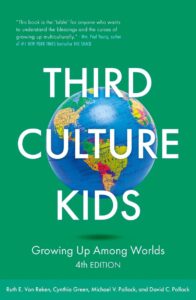
On October 6, 2026. Sheldon Press released the 4 th edition of Third Culture Kids: Growing Up Among Worlds! For history’s sake, I would like to record the “rest of the story” for how a book that all publishers besides Intercultural Press originally rejected because “it doesn’t relate to enough people” has lasted for over 27 years to make this new edition possible!
A bit of history
This newest edition continues to build on the foundations begun in the 1950s when Ruth Hill Useem first coined the term ‘third culture kids’ to describe those she originally studied—US American children who had accompanied their parents into another culture due to a parent’s career.
Next came David C. Pollock, who took the name and topic from academia to those living it. He built on Useem’s work to develop his iconic TCK Profile. There he described the common characteristics and corresponding benefits and challenges he had observed while working with internationally mobile teens, first as a youth pastor in the USA and then in an international school environment in Kenya. In that school, students came from many countries besides the USA. He also noted that local Kenyans coming to the international school had similar characteristics and intentionally left a somewhat broad definition—those how cultural influences travel through people, places, and things.
The TCK Profile, along with his pioneering work developing The Transition Experience model which looked at predictable stages many go through when making a physical move, have been the foundational work for not only the first edition of our book, but each of the editions since then. This is why he rightfully remains a co-author even twenty years after his death. His work has changed the world for countless people.
I met Dave in 1984 and engaged in many ongoing conversations in the ensuing years with him, Norma McCaig who coined the term Global Nomads and Barbara Schaetti who did the first Ph.D research on how TCKs form their identity. It was a fascinating time as we each threw into the “mental pot” the different pieces we were each seeing and tried to put them together into some type of cohesive whole.
By the early 1990s, I saw some very short articles in several major newspapers where the topic of TCK was brought up. There might be a short quote from Dave in the article, but basically they sounded like this was somehow becoming a topic in general and
Dave was quoted almost incidentally.
At that point, I urged Dave to write up his findings before he wound up quoting others who were quoting him. He replied that he didn’t have time to do that. I offered to help—admittedly thinking How hard can this be when he has this all worked out already? and thus began the idea for our first edition—and six years of research after the editor said we could not simply state what the characteristics were, but we had to explain not only the ‘what’s of this experience, but also the ‘why’s’!
The First Edition
One question we needed to be sure about: Were there were enough commonalities for all the various sectors that Ruth Useem had studied—children from the corporate, military, missionary, and foreign service sectors—that we could discuss it under one umbrella term. Many said the experiences between the sectors were too different for that to be done. Norma McCaig, who had grown up as a corporate TCK, felt strongly that the sectors shared more in common than others might guess and we should try.
Was she right? As I prepared to write the book with Dave, I sought out people who had, or were growing up, in any of those basic sectors to compare and contrast their stories. With each interview, it became increasingly clear that this was the right approach to take.
During that process, I met Cynthia Green. She had grown up as a ‘business kid’ in Singapore. We had some fascinating discussions and she offered to help me craft the irst chapter to establish this wider umbrella for all. That was an important piece to begin the discussions which followed but, sadly, after working on that chapter, we lost track of one another for the next thirty years!
In that first edition, we tucked our chapter about grief way back in the book as people were objecting to that concept. Since no one had died, what did we have to grieve about when we obviously had such wonderful and privileged lives? And, in fact, in many ways we did! The book may not have been perfect, but we had started! Intercultural Press published it in 1999 as an academic book. In 2001, Nicholas Brealey bought out ICP and made our book a “trade” paper back. He saw the potential for it to be wider than academia. Thank you, Nicholas!.
The Second Edition
My last text to Dave in 2004 said I thought we needed to consider a second edition as it was becoming obvious that something in this TCK conversation extended beyond the original cohort of internationally mobile children Dr Ruth Hill Useem studied when she coined the term Third Culture Kids in the 1950s. Sadly, Dave died soon after and I tried to honor our many conversations and keep his work alive by doing the second edition in 2009 when we added the concept of Cross Cultural Kids (CCKs) and to bring the idea of the grief into clearer focus towards the beginning of the book.
The Third Edition
As this topic kept evolving, I knew I needed more help and enlisted Dave’s son, Michael, to help write the third edition. He added significant chapters for parents and organizations as well as expanding more details of how they could also help with transition. We also added some beginning concepts on how the three factors of family, community, and place were significant in identity development.
Initially, I presumed this third edition would be our last. But as the world continued to change and our understandings grew, Michael and I began to have weekly conversations to explore what was actually meant by the term ‘third culture’ both
historically and how we ourselves were using it. Anthropologist ATCK Danau Tanu added much to those discussions. We had many, many discussions and wranglings trying to keep enough meaning in the term to know what we were talking about but also
enough relevance to honor the past work of Ruth . Useem. Ultimately, it led Michael to creating his TCK Triad explaining the essence of what is included in the TCK experience.
The Fourth Edition
These conversations took us to the awareness that we needed to try for one more edition of the TCK book to make it more current for our changing world. Our proposal for a new edition was accepted but the publishers decided it should be under a new, self-
help imprint. They also gave us a word count and suggested we would amalgamate some of the things in the third edition to make this a bit shorter and reader friendly.
Our goal was to begin to more intentionally spell out how things we had learned by studying traditional TCKs so intensely and to include more stories of those who grew up among cultures within the borders of their passport country. We also wanted to honor the increasing cultural complexity of so many growing up in multi lingual contexts or any other sort of variation of their CCK experience. We had talked about being in more than one CCK circle in our earlier editions but this time we made it more clear by adding the “And also…” section where readers could plot out their own set of cultural layers depending on their story.
Ironically, as I was working on the first chapter for this edition and wanted to make some major changes to it, Cynthia Green contacted me through Linked In to let me know she had written a novel on how cultural influences travel through people, places, and things culture and identity called Blue Feet Monsoon. Ultimately, we invited her to join us with her particular slant on this topic and together we joined forces to bring a fresh perspective to many of the basics we have discussed before that continue to remain as foundational stones of a culturally fluid childhood.
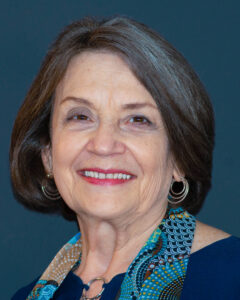
I am eternally grateful not only for each of my co-authors along the way, but also for every person who has told me their story, who has tied this topic to more grounded research, and for all who are willing to grow with us in our efforts to give language and
understanding to the new ways so many are growing up among many cultural worlds compared to how most people did it in the past.
Since I am now 81 years old, I am quite sure this will be my last edition. But I am sure it will not be the last of so many others exploring this and related topics and seeing how it all applies in today’s culturally complex world!!
P.S. If you want to know the rest of my story, you can read Letters Never Sent.